Turning fragmented farm data into pest and disease decisions a manager can trust.
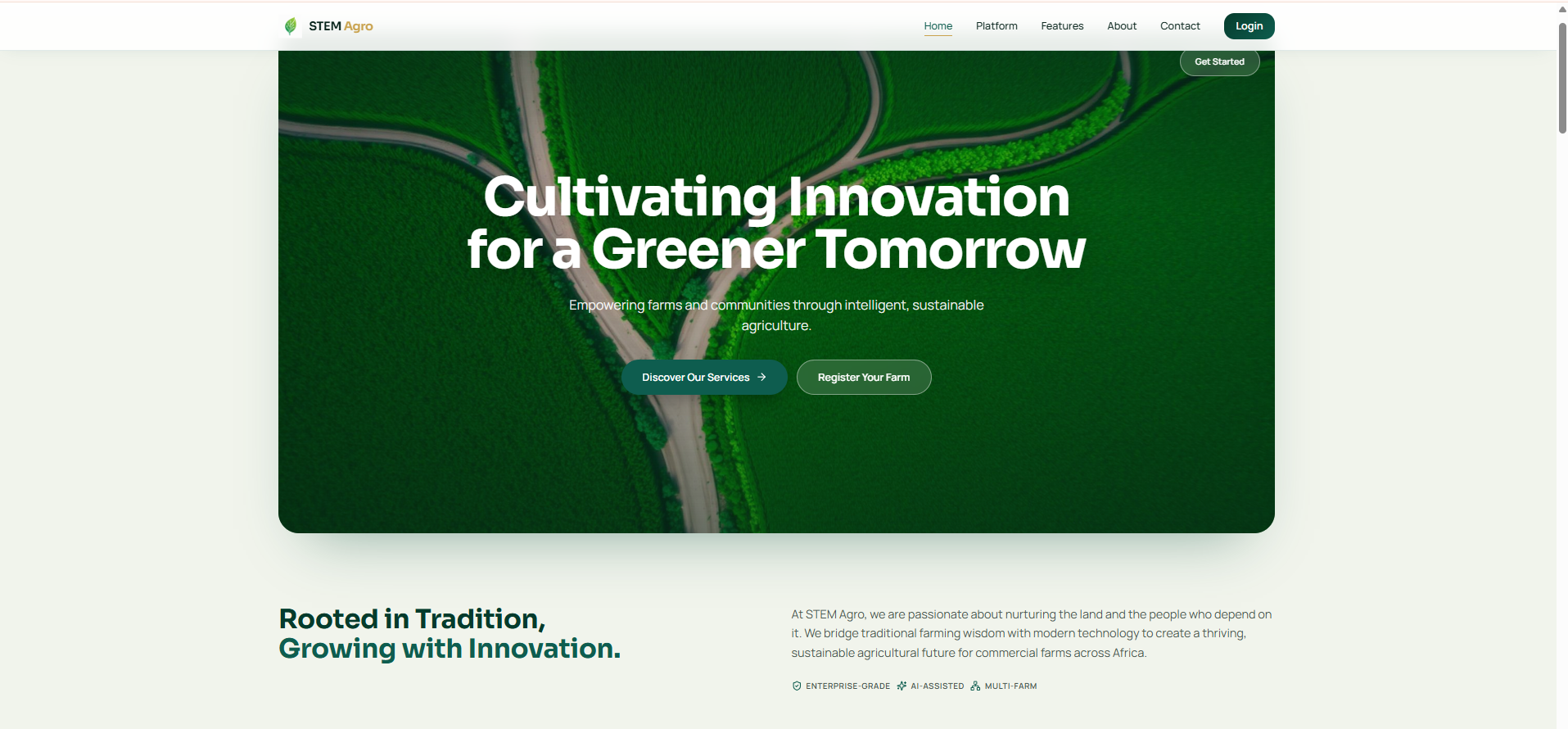
STEM Agro’s farm data lived in spreadsheets, WhatsApp, and PDFs. Autoflow built the platform that runs the whole decision loop: scouts capture in the greenhouse, deterministic code counts the pests, and farm managers get heatmaps, an explainable Farm Health Score, agronomy interpretation, and clear next-step recommendations. The AI assembles the report; it never invents the numbers. The foundation and field app are delivered and client-accepted, with the intelligence layer going into its live pilot.
The challenge
STEM Agro is building a farm-intelligence platform for commercial greenhouse growers. The data that should drive agronomy decisions, sticky-trap pest counts, scout observations, soil and sap readings, Brix, EC and pH, today lives scattered across Excel, WhatsApp, and PDFs.
A farm manager carries every call alone, with no reliable second opinion. The job was to run the full loop on real farms, capture, count, validate, map, score, and recommend, so the manager acts on objective numbers instead of a hunch, and never on an AI’s guess.
How the pieces connect
The AI assembles the report from verified numbers. It never invents the figures, so a manager can act on it rather than second-guess it.
Autoflow’s role
Autoflow Solutions built the platform end to end: architecture, the offline scout app, the computer-vision counting pipeline with human review, the multi-tenant backend on Google Cloud, and the farm-manager intelligence dashboards.
Constraints
- Scouts work in greenhouses where connectivity is poor or absent, so capture has to work fully offline and never lose a reading.
- A wrong count leads to a wrong spray, so the numbers had to be trustworthy, not an AI’s best guess.
- It is multi-tenant from day one, built to scale from the pilot farms to hundreds without a redesign.
- Managers needed interpretation, not just storage: what a reading means and what to do next.
How we built it
- 01
A data engine that does not guess
The counts, scores, and trends are produced by deterministic Python, which gives the same answer every time. The AI is only the orchestrator that assembles the report from those verified numbers. It never invents a figure, so a manager is never quietly pointed at the wrong spray.
- 02
Low-confidence counts go to a human, not a manager
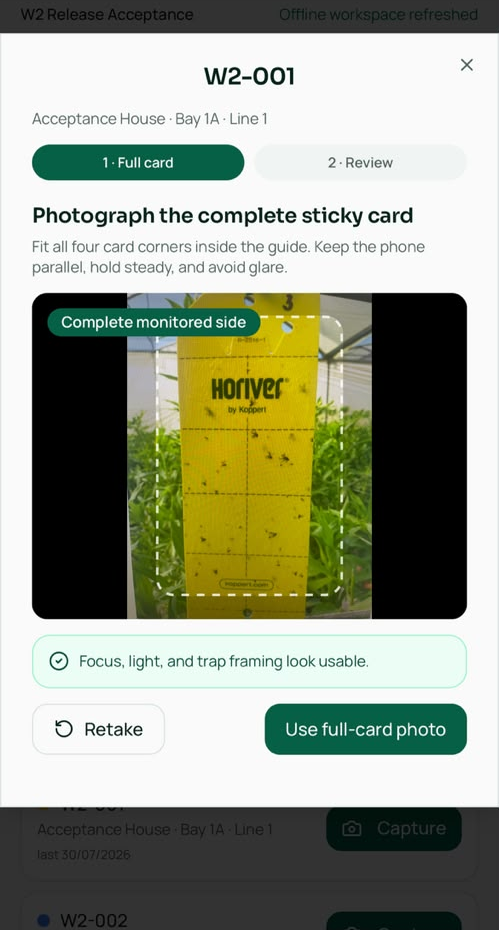
Every trap photo gets a pest count with a confidence score. Anything below the threshold routes to an AI Review Centre where a person confirms it before it reaches a farm manager, and that correction feeds back into the model.
- 03
Model the farm as a digital twin, isolated per tenant
Every trap, reading, and score is tied to its exact place: farm, site, greenhouse, bay, side, and line, down to the crop, in a spatial database. Row-level security means a user physically cannot query another farm’s data.
What we delivered
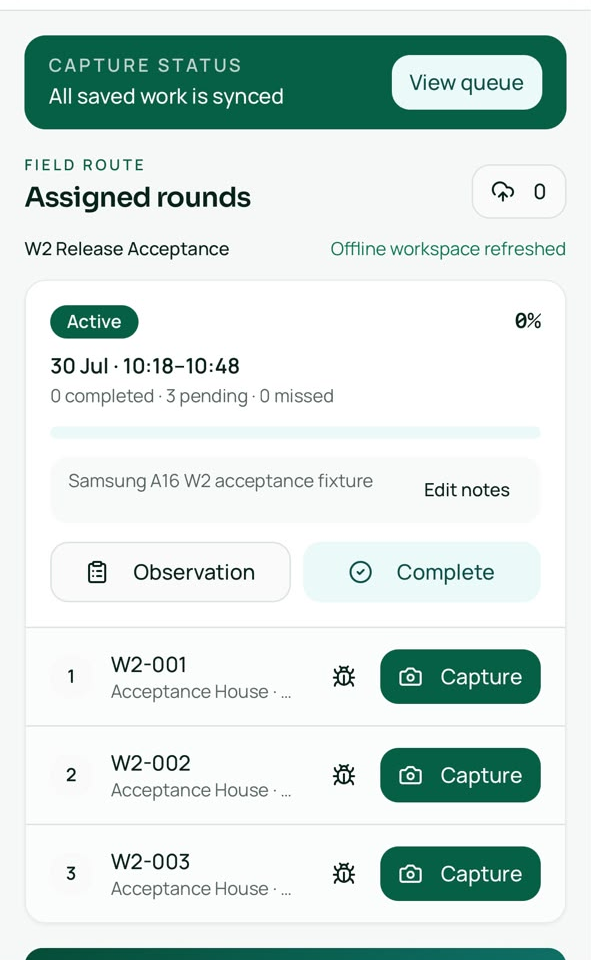
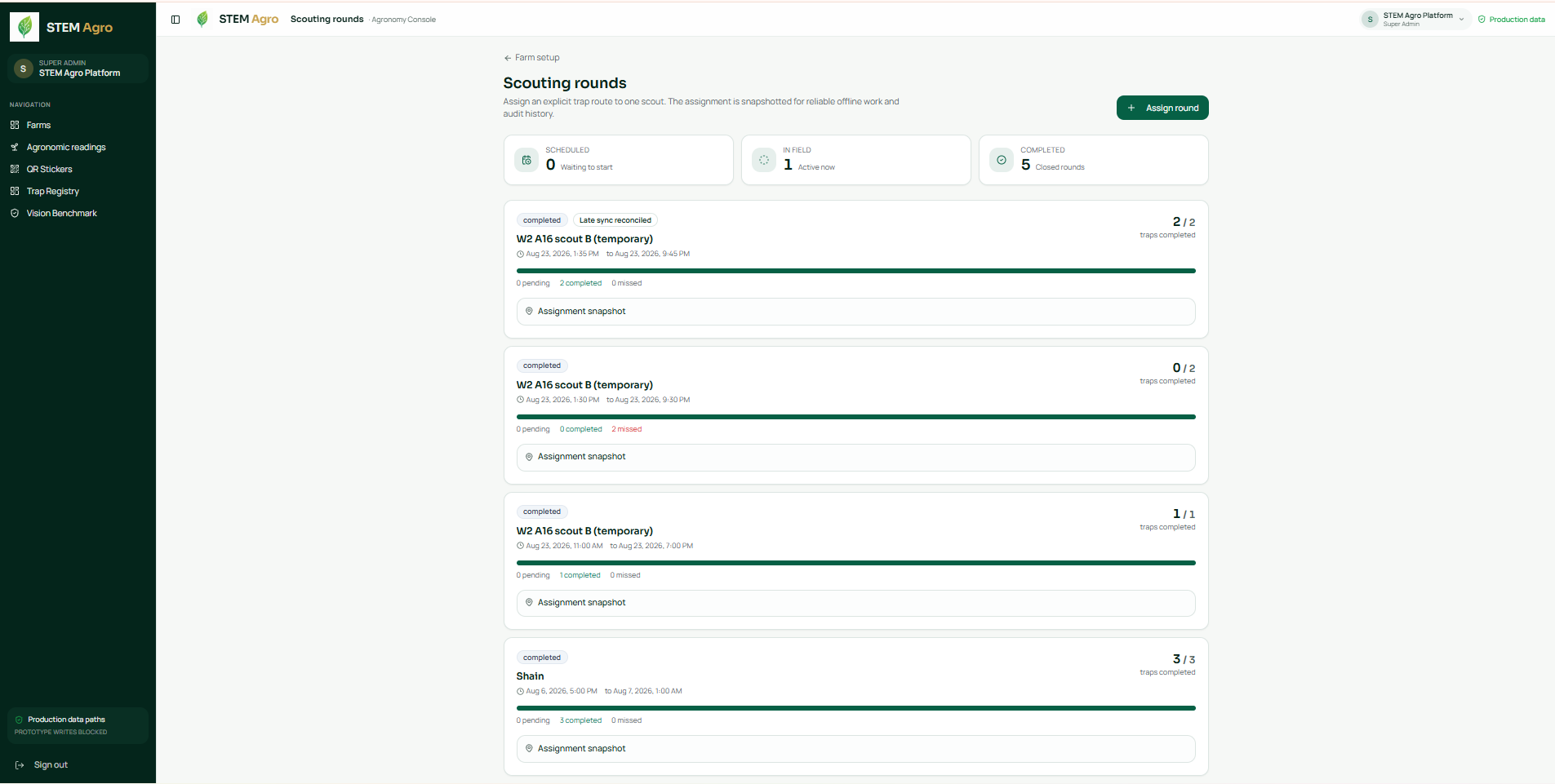
- An offline-first scout app: QR scan to the exact trap, single-photo capture, structured observations (pest and disease, severity, life stage, beneficials, GPS), with a durable sync queue that never loses or double-uploads a capture.
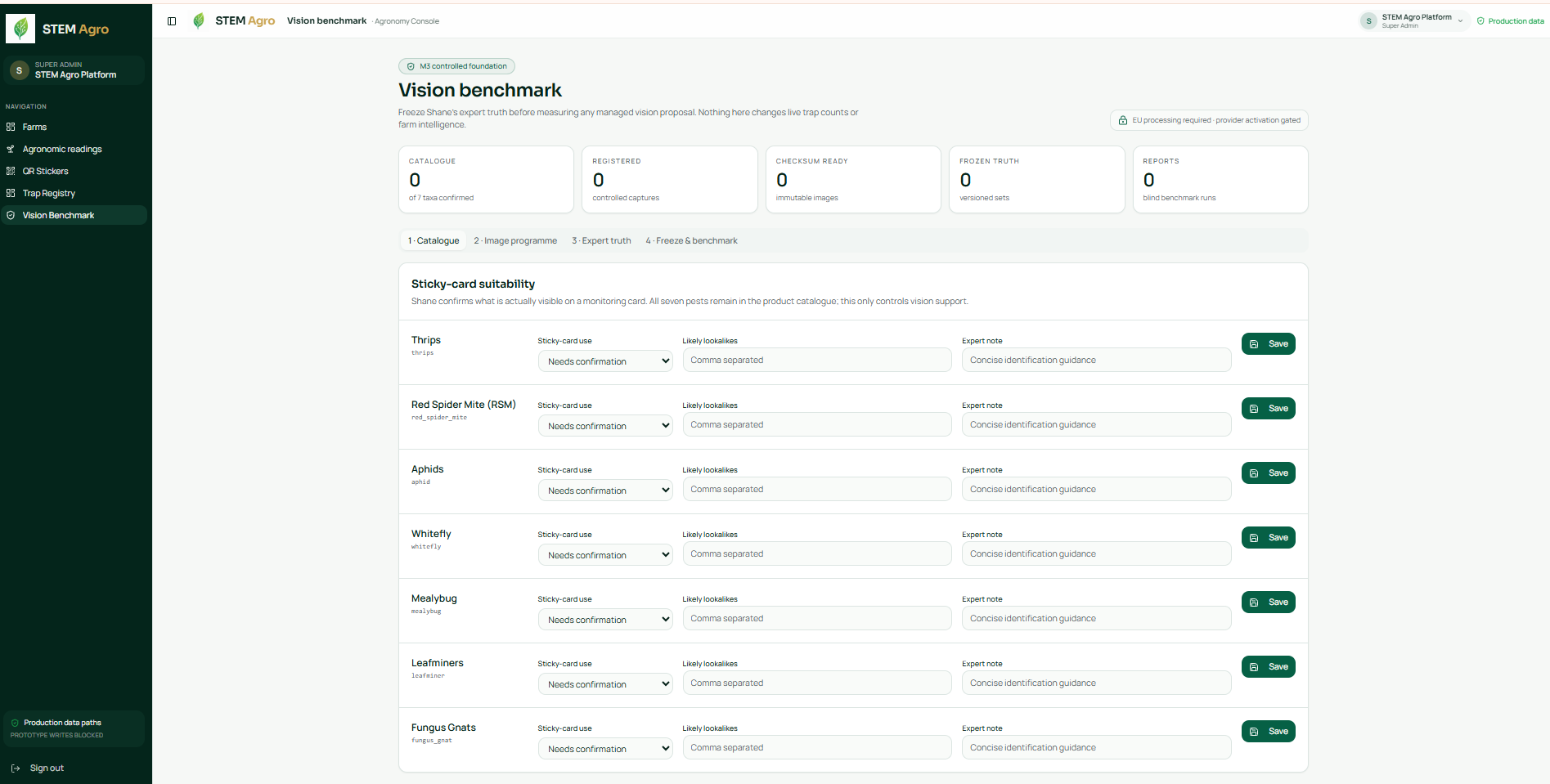
- A computer-vision counting pipeline (thrips, whitefly, aphid) with confidence scoring, and an AI Review Centre where low-confidence counts are confirmed by a human.
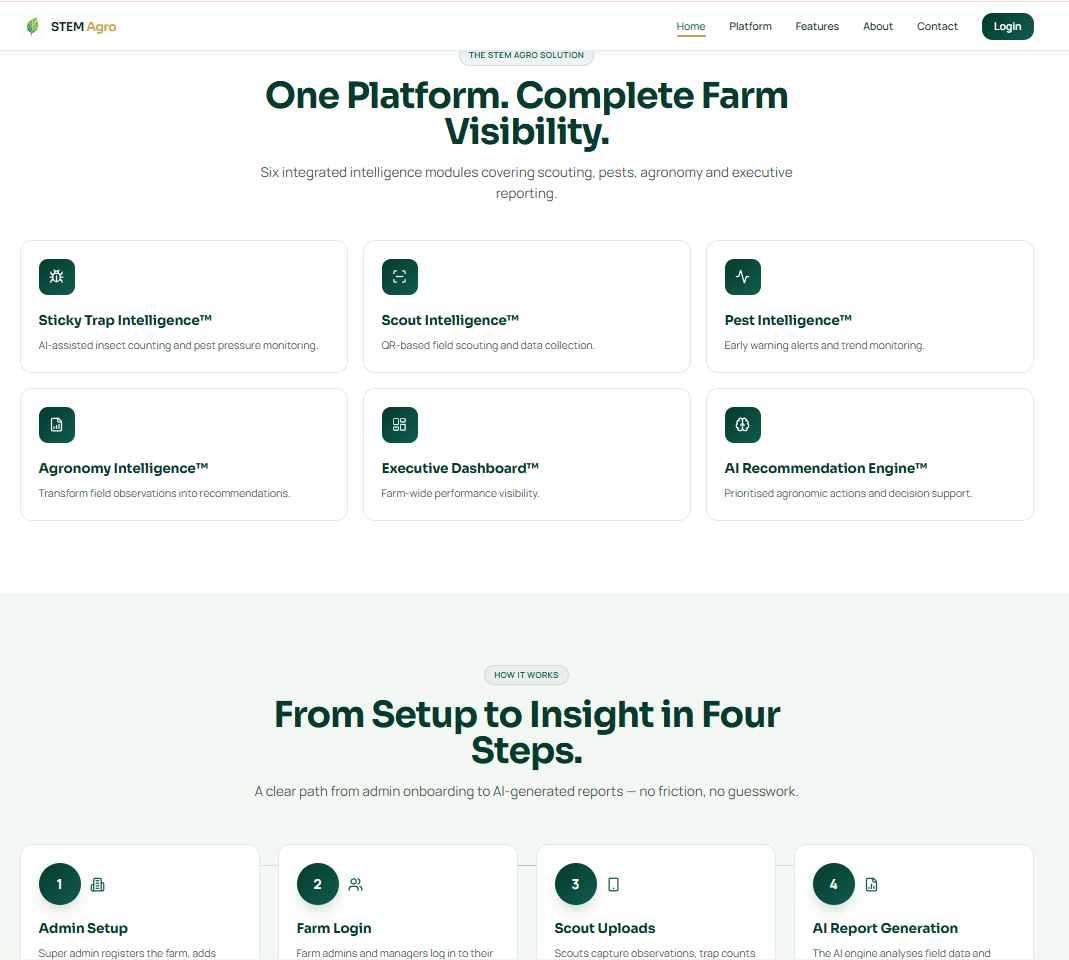
- A farm-manager dashboard: layered per-pest and per-disease heatmaps you can zoom from farm to bay and line, trends, and an explainable Farm Health Score that drills down to the greenhouse driving it.
- An agronomy-interpretation layer: it reads the lab’s DRIS report and computes sap nutrient balance, root-zone EC and pH against target ranges, and crop-physiology scores, on agronomist-signed-off norms.
- A recommendation engine (issue, location, likely cause, risk, next action, with the evidence) and automated alerts: a daily review digest for the admin, and a high-pressure brief to the manager carrying the day’s Farm Health Score.
- A multi-tenant FastAPI backend on Google Cloud, isolated per farm with row-level security.
Evidence
Want a system your business actually owns?
Tell us what breaks or slows you down. If a build makes sense, we will tell you. If it does not, we will tell you that too.